

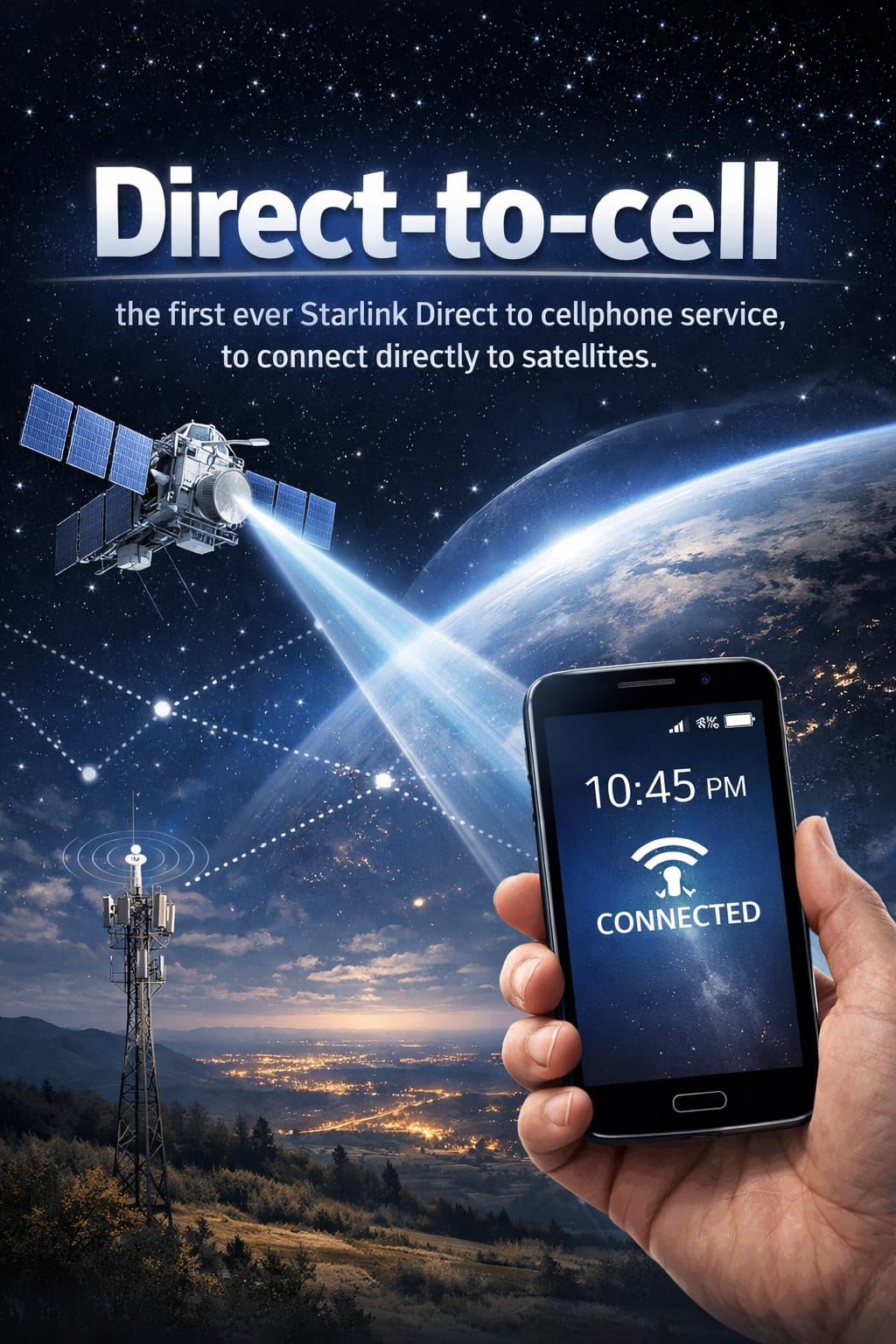
A First in Southeast Asia
The Philippines has just made telecommunications history. In an exciting development for the archipelago nation of over 7,600 islands, Globe Telecom has partnered with SpaceX’s Starlink to launch satellite-to-phone connectivity—making the Philippines the first country in Southeast Asia to offer this groundbreaking service. This collaboration represents more than just technological innovation; it’s a potential game-changer for disaster response, remote community access, and national connectivity.
What Exactly Is Satellite-to-Phone Technology?
For years, satellite phones have existed as specialized, often expensive devices used by explorers, journalists, and emergency responders. What Starlink and Globe are introducing is fundamentally different: direct-to-cell satellite connectivity that works with your existing smartphone.
Imagine this scenario: You’re hiking in the remote mountains of Luzon, your car breaks down on a Mindanao backroad with no cell towers in sight, or—more critically—a typhoon has just wiped out terrestrial communication infrastructure. Instead of being completely cut off, your regular smartphone can now connect directly to Starlink satellites orbiting overhead, sending text messages and potentially making calls even without traditional cellular coverage.
Why This Matters for the Philippines
Geographic Challenges Meet Technological Solution
The Philippine geography—with its thousands of islands, mountainous terrain, and scattered remote communities—has always presented unique connectivity challenges. According to recent data, approximately 10% of the population still lacks reliable mobile broadband access. Traditional cell tower infrastructure is economically challenging to deploy in many of these areas, leaving communities digitally isolated.
Disaster Resilience in the Typhoon Belt
The Philippines experiences an average of 20 typhoons annually, with several causing catastrophic damage to infrastructure. When terrestrial networks go down during disasters, communication becomes nearly impossible for both affected communities and responders. Satellite-to-phone technology provides a resilient backup that could save lives during critical emergencies.
Economic and Social Inclusion
For remote fishing villages, indigenous communities in upland areas, and small island populations, connectivity is no longer just about convenience—it’s about access to education, telemedicine, financial services, and economic opportunities. This technology could help bridge the digital divide that has left some communities behind in the nation’s digital transformation.
How the Service Works
The technology leverages Starlink’s growing constellation of low-earth orbit satellites equipped with advanced eNodeB modems that function essentially as “cell towers in space.” Currently starting with text services, the partnership plans to expand to voice and data capabilities in the future.
What users can expect:
- Seamless integration: No special app required for basic messaging
- Automatic switching: Your phone connects to satellites only when terrestrial networks are unavailable
- Clear skies requirement: Like traditional satellite services, it requires a relatively unobstructed view of the sky
- Progressive rollout: Starting with emergency messaging, expanding to broader services
The Broader Impact on Philippine Telecommunications
This partnership between Globe—one of the country’s largest telecom providers—and Starlink represents a significant shift in how connectivity is approached. Instead of viewing satellite and terrestrial networks as competitors, they’re being integrated as complementary technologies.
For Globe, this collaboration enhances their value proposition significantly, allowing them to offer “100% Philippines coverage” in a way previously impossible. For consumers, it means more reliable service regardless of location.
Looking Ahead: Challenges and Opportunities
While the technology is promising, questions remain about affordability, network capacity during mass emergency events, and the timeline for full implementation. The service will initially be free, but pricing models for the long term haven’t been fully disclosed.
Additionally, the entrance of satellite connectivity into the mainstream market may prompt other Philippine telecom providers to explore similar partnerships or alternative satellite solutions, potentially increasing competition and innovation in the space.
A Model for the Region
As the first Southeast Asian nation to deploy this technology at scale, the Philippines serves as a crucial test case for the region. Neighboring countries with similar geographical challenges—like Indonesia’s 17,000 islands or Vietnam’s mountainous regions—will be watching closely. Success in the Philippines could accelerate adoption across Southeast Asia, potentially connecting millions who currently live beyond the reach of traditional cellular networks.
Conclusion: A Connected Archipelago
The Starlink-Globe partnership represents more than just another telecom service—it’s a reimagining of what connectivity means in an archipelagic nation. By literally reaching for the stars to solve terrestrial challenges, this initiative promises to make “no signal” a phrase of the past for Filipinos, while strengthening the nation’s disaster resilience and inclusive development.
As the service rolls out in the coming months, it will be fascinating to watch how this technology transforms lives in the most remote barangays, empowers disaster response teams, and ultimately helps weave the Philippine islands together into a truly connected nation.


 then choose "Install".